Jim Henson biographer details the artist and genius behind ‘The Muppets’
By Chris Drape, Mississippi – Clarion Ledger
About five years before he published “Jim Henson: The Biography,” author Brian Jay Jones found himself going down a rabbit hole online.
Jones, who describes himself as part of the “Muppet Generation,” is also known for biographies on figures, including George Lucas and Dr. Seuss. But around 2008, he landed on Henson’s Wikipedia page and began digging through the citations at the bottom.
“There was nothing about his life per se,” Jones said in a recent interview with the Clarion Ledger. “Everything was about his work … I just thought, I can’t believe somebody hasn’t done this already.”

Brian Jones, author
For someone as culturally influential as Henson — not only the creator of the Muppets, but a pioneer of independent film and children’s television, as well as the mind behind projects such as “Sam and Friends,” “The Dark Crystal” and “Labyrinth” — Jones couldn’t believe no major biography existed.
So Jones dived into a yearslong effort and became the first writer to publish a comprehensive biography of Henson, with the full involvement of the family and the Henson organization.
At the time, Jones was living in Maryland, just one county over from where Henson partly grew up. Jones began reaching out to archivists and people connected to the Jim Henson Legacy, a nonprofit organization dedicated to preserving and promoting Henson’s work and contributions to puppetry and media arts.
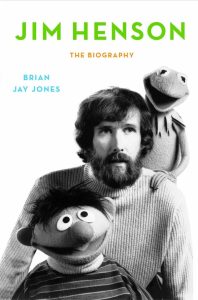
Brian Jones’ Jim Henson biography book cover
Over the course of the project, Jones interviewed dozens of people close to Henson, including family members, collaborators and longtime performers. That included conversations with Henson’s children, members of his longtime Muppet performance team and his former wife and creative partner, Jane Henson.
Jones later learned the Henson family regularly received requests from writers hoping to tackle the project. After months of conversations with family members and Henson’s former publicist Arthur Novell, who passed away earlier this year and was then-president of the Jim Henson Legacy, Jones began building trust through extensive archival research. He would visit the Library of Congress, digging through old local newspapers and assembled a sample chapter on Henson’s early television career. He submitted it, and got the job.
The result was “Jim Henson: The Biography,” published in 2013. The book became a New York Times bestseller and was praised for presenting Henson not just as the creator of beloved children’s characters but also as an ambitious filmmaker, television innovator and endlessly curious artist.
More than a children’s puppeteer
Born in Greenville and raised partly in nearby Leland before moving to Maryland, Henson is best known for creating children’s favorites such as “Sesame Street” and “The Muppet Show.” But Jones said Henson spent much of his career resisting the idea that he should be boxed in as simply a “children’s puppeteer.” Jones said he wanted the biography to show readers more about Henson’s creative mind.
Before “The Muppet Show” turned Henson and his characters into global stars, he spent years working in advertising and experimenting with avant-garde filmmaking, abstract visual projects and experimental television concepts throughout the 1960s.
Jones points to projects like “Time Piece,” which Henson wrote, produced and starred in and became an Oscar-nominated short film in 1966. There’s also “The Cube,” a surreal television film available on Youtube. Both feature no puppets at all.
A recurring theme throughout that Jones’ kept coming back to again and again throughout the interview is that Henson was “creatively restless.” He was constantly experimenting with filmmaking and visual storytelling, while also maintaining a deep fascination with television itself.
“This is at the time when, remember, they’re calling television ‘the vast wasteland’ and talking about how it’s rotting your brain,” Jones said. “And Jim loves TV and really wants TV to matter and puppetry was his means to an end to getting on TV.”
Henson’s fascination with television eventually helped launch the Muppets and reshape puppetry on screen. At the time, television puppets were typically filmed performing inside traditional puppet theater stages. But Jones said Henson realized the television frame itself could become the stage, allowing puppets to move more naturally across the screen and interact more dynamically with actors and environments.
The Muppets themselves predated both “Sesame Street” and “The Muppet Show.” Henson first introduced early versions of the characters in 1955 through “Sam and Friends,” a local television program in Washington, D.C.
But the Muppets gained national recognition through “Sesame Street,” which debuted in 1969, before “The Muppet Show” launched in 1976 and turned characters such as Kermit the Frog and Miss Piggy into the household names they are today.
Henson never stood still
But Jones said even at the height of that success, Henson was already looking for the next thing. It was that “creatively restless” side of him showing up again.
Henson voluntarily walked away from both “The Muppet Show” and “Fraggle Rock” — another massive Muppet hit — while they were still hugely successful so he could chase new ideas. At any given time, Henson had something in production. He often sketched ideas onto yellow legal pads with felt-tip pens, Jones said.
“He was always one creative project after another,” Jones said. “If something worked, great. If it didn’t, he’d say, ‘You know what? That was a really nice project, and I’m glad we made it,’ and then he’d just keep moving forward.”
Jones noted that “Fraggle Rock,” which debuted on HBO in 1983, was one of the network’s first original series — years before landmark HBO shows such as “The Sopranos,” “Game of Thrones” and “Veep.”
“It’s the original ancestor of all these great HBO series,” Jones said. “But again, it’s another one that’s shooting on all cylinders, just really doing great. And Jim says, ‘It’s a very nice show,’ and stops it after five years.”
There was also the ambitious film “Labyrinth,” the 1986 fantasy starring David Bowie and Jennifer Connelly, which has since become a cult classic despite underperforming during its initial release.
“He was right, but at the wrong time,” Jones said of the film. “It found its audience, but it took a while.”
Jones said Henson’s willingness to take creative risks — even when they didn’t immediately succeed — was part of what made him so influential.
Henson died unexpectedly in 1990 at age 53 from complications related to a bacterial infection, cutting short a career Jones believes still had decades of experimentation ahead of it.
To this day, Jones said trying to imagine what Henson might have done next is almost impossible.
“What would Jim do is a very dangerous game,” Jones said. “He always figured out something nobody else had thought of yet.”
Charlie Drape, the Clarion Ledger’s Jackson beat reporter, grew up on “Sesame Street,” with a stuffed Animal — the wild-eyed Muppet drummer from Dr. Teeth and the Electric Mayhem — regularly scattered among the toys in his room. Every Christmas, “John Denver and the Muppets: A Christmas Together” still gets its annual spin in the Drape household.