An Interview with Curator Amanda Slack-Smith
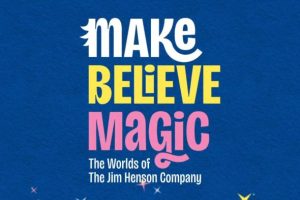
Beginning September 12th, Muppet fans can head to Brisbane’s Gallery of Modern Art to see their newest exhibiton, “Make, Believe, Magic The Worlds of The Jim Henson Company“.
With puppets, sets and more from Sesame Street, Fraggle Rock, and even The Happy Time Murders, this promises to be a rare chance to get up close to the characters and worlds we all know and love.
Before I head up to Brisbane for the exhibitions opening (I love being ‘press’!), I had a chance to sit down with the exhibition’s curator, Amanda Slack-Smith, to get some behind the scenes information on how this came together, what fans can expect, and what’s written on the back of Fraggle Rock‘s ‘The Great Hall’ set…

JARROD: Thank you very much, Amanda, for joining me here on ToughPigs. I’m very, very excited for the exhibition. It’s very rare that Australia gets something this cool that the Americans get jealous of. Tell me, what was the starting point for this exhibition, when did you realize how big it was going to become?
AMANDA: How did I win the golden ticket?
JARROD: Exactly.
AMANDA: I was working on an exhibition about three years ago called Fairy Tales and part of that had a section about Labyrinth. That was a fine art and film exhibition. So when I was in New York, I went past the Jim Henson Archives. And of course, that’s partially also the Creature Shop there as well in New York. I met with the fantastic and fabulous Karen Falk, who’s the director of archives, and Susie Tofte, who’s an archivist there.
It was just one of those meetings where you just feel such a synergy, not only from just the creative practice that was happening around us as we were talking and I got a tour and all that sort of thing, but also just the energy and passion that comes from what I now know is the entire organization. But those two people, it was, it was really electrifying. And I was like, there is something we’ve got to tap into this. If they if they’re willing to do a show, we really should do a show because I mean, obviously 70 years of history, like there is so much to talk about.
But to have that level of engagement and generosity is such a rarity and a beautiful thing for a curator to see and a Jim Henson fan. I mean, it sort of wrote itself from there, but it was a really amazing opportunity.
JARROD: So obviously we’ve got, you know, Jim Henson creates Sesame Street, well, co-creates Sesame Street, The Muppets, Labyrinth, Dark Crystal, all these things. How do you go about bringing all of this together into one cohesive exhibition?
AMANDA: Yeah, it’s a very fulsome history.
JARROD: It’s a lot.
AMANDA: You know, it’s a company that has a lot going on at any one time. I mean, you’ve hit the highlights there, which all of those are incredibly important and obviously have a lot of very, very passionate fans. But there’s a lot of other projects that work in and around that and the way they think, which really inform the next thing that happens. And so this show isn’t actually chronological because what I was interested in was, what is it about their practice that they do, and has been seen across their 70 year history.
One is their passion and creativity and dedication to problem solving and that sort of thing. But also they revisit ideas. Like they are not a company that puts something on a shelf and walks away from it and then moves on to the next thing. They’re constantly rethinking and revisiting, but in new and fresh and iterative ways, and I find that’s very, very exciting. Because just even something like the Inspired Silliness cruise ship liner show that they did recently, that was calling back to Sam and Friends. And it was also a Broadway show. There’s so much that was happening that was feeding into just that. And what you ended up with was something that was fun and energetic. And I would have loved to have been on that cruise, for example.

JARROD: So how much of this exhibition is about the work versus maybe the man, Jim.
AMANDA: It’s about the company because, you know, we’re in a very interesting time for them because it’s been 35 years that Jim was the head of the company and then 35 years where the family was largely the head of the company as well, and it’s been family led. And I think that’s also why I find their practice really interesting because I think those things we were just talking about, that innovation that needs to collaborate both internally, externally, and those kind of, like the idea is the important thing and the product is the important thing and what comes out of it is just as reflective in the past as it is now.
So there’s that synergy that the children have grown up to and now are really obviously amazing creative forces in their own right. So it really talks a bit about both.
So we were talking about, well, how do you do 70 year history? Well, the first kind of gallery space we’ve got looks at ‘The Method, the Making and the Magic’ is what it’s called. So it looks at things like, we sort of start with looking at the power of television in those early years, which is very obviously Jim Henson and Jane Henson driven, through Sam and Friends and you know your fairy tales and you know that sort of Ed Sullivan, Jimmy Dean that sort of era, but there’s a lot of those sorts of things which also feed back. You know, that whole Henson method of puppeteering really exploded from what we understand puppeteering to be on screen like we’re so used to just seeing puppets popping in and out and around and you know that energy. Seeing that, you know, when the first puppetry was being happening, it was with these arches and kind of Punch and Judy style, and you know, sort of very contained. And then of course, he was like, well, couldn’t the screen be that? And then you just suddenly have this energy and vivaciousness.
So, you know, we do talk about that. We then sort of move into a section called ‘The Art of the Pitch’, which kind of looks at their work in commercials, because, you know, if you’re talking about where did Jim and the company get their 10,000 hours at the grindstone? It was through commercials. But also, it’s more than just commercials because it’s about learning how to pitch.
Because, you know, you know, at The Muppet Show, it was 15 years between the scratch of the back of the head idea into actually becoming something and then actually having to get funding from overseas. So this section also looks at some of the projects that succeeded. You know, they’ve just done Duff’s Happy Fun Bake Time. That title just blows my mind, which, you know, which did really well. It was, you know, a recent pitch that actually came back to the company that they wanted to work with the company and do this cooking show with puppets.
But then there’s some more historic things like, you know, Starboppers, which was a unrealized project that Ron Mueck worked on, which, you know, from an art institution, you know, Ron Mueck is very beloved. So you’re kind of like, oh, well, that’s super interesting ’cause that didn’t succeed, but Puppet Man did succeed for a little while, but that came after the Muppets.
And so it’s just sort of like, oh, where does these things kind of lock in together? And then Turkey Hollow, which started out as kind of the 1960s idea. They made the puppets, they did some testing, that didn’t work, then became a comic. And then the daughter, Lisa Henson has picked that up and taken that forward and then the Thanksgiving holiday film came out in 2015.
So I really love just this, the way that they just kind of keep revisiting and rethinking ideas. And then that spills into the next section, which is called ‘Never Waste a Good Idea’, and really kind of embraces that. But it’s a case study also about Sesame Street, because Sesame Workshop owns Sesame Street. It’s always been their product. Henson was invited into that. But he brought with him all of that kind of learning and knowledge he found in commercials.

How do you end something? You know, how do you storyboard? How do you make short, sharp, you know, content, but still be experimental? Because he was originally an experimental filmmaker. But you know, something like Big Bird started out as Stouffer’s Frozen Foods commercial that never got realized, but the drawings and kind of the sketches and ideas of that is really fascinating. And then we get one of the most iconic puppets worldwide, that sort of thing.
Or something like Cookie Monster who started out as the very toothy wheel stealer who was eating machines, and then suddenly he’s eating cookies and has no teeth and he’s very kind and friendly.
JARROD: And one of my closest friends. We have hung out multiple times.
AMANDA: I actually got to meet Oscar the Grouch. Can I just drop that in the name drop conversation when I was in New York?
JARROD: Very cool. Very nice.
AMANDA: And I have to say, I was mesmerized from the moment I looked into those beautiful glossy eyes.
So yeah, you know, like we kind of also, that’s what that room’s doing. It’s obviously celebrating the work on Sesame Street, but it’s looking at the Henson contribution to that history that they’ve done. Obviously, they still made the puppets which is amazing. I mean, it also talks about a relationship that’s been going since 1969 and, you know, that that kind of collaborative energy and being able to hold on to a powerful relationship like that.
So but, you know, that’s sort of that’s sort of talking about his work in children’s television. But obviously he did Fraggle Rock, which was his own, you know, kind of attempt at world peace in the way that Sesame Street was trying to do some of that as well.
And so then you have this other thing, which then goes into his really exciting creative mind and world building and everything that comes with that. So I think what then becomes interesting with Fraggle Rock is that he kind of essentially lets go of it in some ways because obviously he’s flying backwards and forwards with Sesame Street and Muppets, so he had a lot going on.
But it also then meant that the company was picking it up and running, you know, had creative input and openness to kind of how the show was put together. And I think that really, that’s that energy, that’s that shift over, that crossover part where you really start to see that the company is just this breathing entity of creativity. And that’s why it’s still so strong today.
And that’s just the first gallery.
JARROD: So there is a lot to see.
AMANDA: There is.

JARROD: And I’m excited and I sort of I want to hear everything, but I don’t want to hear anything because I want to be surprised when I come. I want to like walk into a room and be like, oh my God, it’s this. Oh my God, it’s that. Can I ask, do we get much of like the Muppet Show era or is that sort of skipped over?
AMANDA: Well, we get a little bit of that. I mean, as you know, that’s been owned by Disney since 2004. It’s not a Henson. And so the company really has obviously moved on from that. That was 20 plus years ago now. But we do talk about that. There’s a section, well, obviously Sam and Friends was kind of late night television. You know, Henson wasn’t a children’s entertainment producer, really. That’s something he loved doing and, you know, he really loved doing Sesame Street, but he was always kind of going, ‘Oh, how do we get puppetry back into kind of the either the family sphere or adult sphere?’
And that was what he was doing with Muppets, obviously. He was, you know, he wanted to pitch it because, you know, Sex and Violence, the second pilot, you know, it’s in the title. Like, but not only is he tongue-in-cheek with that, but he was also just trying to shake it up a little bit and pull them back into being for adults.
So there’s a section that we call ‘Late Night Legends’, which really kind of brings together a couple of things. It brings together the Muppets TV show, it brings together some Muppet films, but also then it’s talking about, as I said, this is not chronological. We’re talking at the same time that obviously is SNL. So we’ve got the SNL puppets, a couple of SNL puppets, but we’re also talking about Puppet Up, you know, because that’s obviously Brian Henson’s answer.
But the thing I love about Puppet Up, it’s not just about doing puppeteering for a mature audience, it’s also a training mechanism for them. You know, how do you keep your puppeteers sharp and improv ready? And, you know, how do you get new puppeteers to work closely? I mean, those, the amount of like practically cleaving together to actually run a puppet is, you know, like that’s a trust exercise right there. Forget falling backwards into somebody catching you, try puppeteering with six other people.
JARROD: Oh yeah, you get well acquainted with each other’s armpits.
AMANDA: Yeah, well exactly. But also this must be a kind of a hive mind, a creative hive mind that comes with being able to move forward. So we look at Puppet Up in that section. We look at Happy Time Murders, which is a fun one. It’s obviously also Brian’s. We got a little nod to Dog City there, because if you think of the comedy in Dog City, it’s actually, it’s pretty sharp, you know. It’s got edges, which is fun.
I mean, I love the fact that Henson used to talk about not everything had to be for children, but also children could get challenged as well, you know, in safe ways, but you know, you didn’t have to make everything so gentle all the time.
So, and then also the other thing in that space, looking at ‘Late Night Legends’ is Earth to Ned, which is a series that they did do for Disney. And one of the most complicated puppets they’ve done in recent history, which is amazing. Like, six puppeteers required both in practical puppeteering and animatronics. And, you know, you’ve got BETI, who’s their digital puppetry system puppet. So you know, you put all that into a space and you’re kind of having this conversation about puppetry for different audiences but also just playfulness and you know that that Henson humor, which is delightful.
That was a lot, but… (Laughs)

JARROD: But I love it. And what I’m really appreciating, Amanda, is your enthusiasm. Because, you know, there is a world where someone will run this exhibition and just be like, Oh yeah, this is all cool stuff. Maybe someone will enjoy it. I can feel your enthusiasm. It’s infectious and I’m really enjoying it.
So obviously with all these worlds that you’ve got, you’ve got characters from, I mean, the fact that you’ve even referenced Dog City is impressive. But is there anything that’s made you go, I can’t believe I’ve actually got this in front of me.
AMANDA: Look, I’d almost say everything in the show, to be honest, because, you know, the interesting thing, as you would know, is just because you get to see it on screen and it seems ageless to us because it’s always, you know, it’s got it’s perfect capture doesn’t mean it still exists. So, you know, one of the challenges with a show like this is all the stories we’ve just unpacked here. How do you tell them with enough information, that for somebody who isn’t as deeply embedded as you and I are, it’s in a way that’s really engaging for them and meaningful for them?
And that means multiple things. You know, for a fine art exhibition, you could probably have you know, one object which easily stands in for, you know, multiple ideas and that can be on its own. Whereas I think with film exhibitions, you need context and multiple things to pull that together.
I mean, obviously, Kermit, you have a Kermit, everybody, you know, everybody has an opinion and a perspective on Kermit, but Dog City, less so, you know, I mean, it’s probably not high on people’s radar of what he’s done, but it’s so, it’s so good, and when you put it near Happy Time Murders, which we have, you go, oh, well, there’s your conversation right there, because you’ve got your alleys, you’ve got your neo-noir, like, there’s just an edginess to it all that really kind of talks, even though they’re, you know, almost 30 years apart.
So I think that’s kind of when we managed to bring enough together of one story, that’s where it’s exciting because there’s multiple times where, the things that these materials these puppets are made from are all about the performance. They’re not about archiving. They’re not thinking, how would this look on a shelf in 30 years time? They’re going, how do I get the eyes to crinkle? How do I get the nose to snarl or, you know, contempt or happiness or joy or, you know, like how do I get that? That’s what they’re thinking.
So the materials are quite vulnerable to aging. And so, you know, the number of things that are lost just because, they call it ‘toast’, actually, it’s like honeycomb and it just dissolves. Or it liquefies. Thankfully, I haven’t seen that one. But they’re like, one or two archives were like, oh yeah, no, we could probably lend you this. And then open up the crate. And since the time it was packed, it’s starting to dissolve, which I mean, the beautiful thing is a lot of those things can be refurbed from the inside and that sort of thing. But that’s extensive work, that’s extensive costs.
So I suppose that’s the challenge for me. There were so many kinds of like, we’re almost there but we didn’t quite have enough to tell that story. But if you shifted left, oh my God, there’s another story. Oh, this is amazing. Like we can tell it through this way.
So I think the exciting things were things like Taminella for me. I love Taminella. I think she’s gorgeous. And I’m so, so happy to have her in the show because she says so many things to me, like that beautiful moon face with the one tooth. You can see that character in so much of their history, like even the early Rowlf drawings, which we also have in the show. You know, it’s the one tooth.
And then you’ve got the kind of distressed costume, which is, you know, layers and layers of distressed materials. And, you know, she looks very witchy because she is a witch. But then I’m kind of like, oh, there’s something so Skeksis about this, you know.
We got Thought Lion, which I was so delighted with. We were able to refurbish the Thought Lion.
JARROD: Amazing.
AMANDA: So yes, absolutely glorious. I have not seen it since the refurbishment. I am so excited to see it. That’s top of my list. Yeah, look, I mean, there’s 182 puppets in the show and over 100 works of paper and lots and lots of clips so to pick a favorite is…
JARROD: I won’t make you do it, don’t worry. I should ask on a personal level have you have you got the original design for Big Bird that Jim did.
AMANDA: There’s the original which was more cone head, is that the one you’re meaning from the first design?
JARROD: So Jim did a design ah, not the Stouffer’s Food one, for Sesame Street. I only ask because I have that picture tattooed right here.
AMANDA: Oh my goodness can I see it?
JARROD: Tell you what, it’s going to be too hard to show you but I’ll get it up on my phone and I believe most people reading this will have seen it.
AMANDA: Oh, is it the… Hang on. I think I may know which one you’re meaning.
TATTOO
AMANDA: Oh, gosh, yeah, that’s gorgeous. We don’t have the original, actually, it’s quite fragile, but we do have a reproduction so that people can see it. There’s not many reproductions in the show, but that is one that’s important to include, because a lot of that material has been exhibited a lot. So obviously, they’re now looking at how do you preserve that for generations rather than my seven month show?

JARROD: So one of the big attractions is you have the Great Hall from Fraggle Rock: Back to the Rock.
AMANDA: Amazing.
JARROD: That’s something I’m very excited to see. What’s involved in bringing that entire thing? Because that’s not a small set. And how are visitors going to be immersed in that? How are they experiencing this?
AMANDA: It is huge. And we only have a section of it. I think this is what I’m really hoping people will understand when they see this. Because we also have the model which shows the whole set, and we’ll be able to see the bit that we’ve brought over. Now, the bit we brought over is still going to kiss the ceilings of GOMA, which is not short. Like we’re talking–
JARROD: It’s not. I have been there.
AMANDA: 6 odd, 6 plus meters. And I think it’s something like, you know, 8 to 10 meters either direction. And that’s just the Great Hall part of it. As well as Doc’s Studio, we have Doc’s Studio, and also Boober’s Cave. So essentially, as you would watching your Fraggle Rock before you come, that opening sequence where they fly through the window of Doc’s Studio, through the portal, you come out to the Great Hall, and then, you know, you go up through the portal of the Gorgs, and then you come back down, and you’ve got down to Fraggle Rock at Boober’s Cave. You can walk that. Oh. Which is pretty amazing.
JARROD: Amazing.
AMANDA: Yeah, yeah, yeah. And I think it’s really exciting because it is all still at puppeteer height as well.
JARROD: Okay. Incredible.

AMANDA: So, you know, puppeteer height is anywhere from 120 to 180 centimeters, because obviously, if you’re lucky enough to be able to have comfort on set, which they don’t always have, they get to stand. And of course, the arm is right above the head. So everything has to actually raise to help them with that.
Yeah, no, that was exciting. That came over from Canada quite a while ago, last year, actually, because there was just this window of opportunity where if we wanted to, we could bring it over. And we said yes, and it was very exciting. But I can’t wait because you can also walk behind as well. So you’ll be able to walk the puppeteering corridor where, you know, they stand on a box and pop up.
You’ll get to see the graffiti that’s like “Mokey for President!”. Because they do very long hours on productions, and I think that’s what’s so exciting about this set for me too is just the ability to be able to share it, because unless you’re a journalist or a VIP, these are working sets and they work long hours and the whole point is they have to get the production done, so they don’t do tours, this is not open to the public. So this is the only time actually really anywhere in the world you will get to see this set, it is amazing.
And it’s authentic. I think that’s the thing, so much of what we’ve been trying to do with the show is obviously authentic. You’ve got beautifully made puppets, you’ve got beautifully archived puppets, works on paper, and obviously the clips themselves. I’m super excited about it. We’ll have about 50 puppets as well from Fraggle Rock so you’ll get to see a Gorg, Pa Gorg, actually.
JARROD: Very nice.
AMANDA: The whole Doozer setups and obviously, yeah, all your favorites and the top 5. So I’m so excited about this. It has been an undertaking, I cannot lie. It’s been quite a big challenge. But again, this is why they say how much I admire the company because they were there all the way. Well, they’ve got other things to do. But this was a big challenge for us.
JARROD: Incredible. I am very, very excited. 25:18
AMANDA: Yeah, I can’t wait to walk it myself, so… because, obviously I’ve been seeing it in pieces, it has to be put together, you know, all that sort of stuff. But, I mean, the other thing is we haven’t talked about the last two rooms yet either.
JARROD: Please go ahead.
AMANDA: We have a section called ‘The Magic Continues and Other Adventures’ which looks at their work with other companies as well. You know, we’ve got the animatronic from Dreamchild, the Caterpillar, which has come from the Academy Museum in LA. We have different stripped heads of Buddy and a few other gorilla heads that kind of really show the mechanics of it. Because we have a section which really just looks at how have they really influenced the technology and advancement of puppeteering.
We’ve got the Storyteller dog. Obviously, this is the section where we’ve got the Thought Lion, which is brilliant. But, you know, we also then kind of look at the digital puppetry system in this section as well. We’ve got Duchess from Babe. We’ve got a section there which kind of looks at different productions. You know, they work with Moschino, which was really interesting, where they did Moschino’s fashion show as a puppet show during COVID, that sort of thing. They work with a lot of musicians on music videos as well.
And then the last section goes into worldbuilding again. Obviously a section on Labyrinth, totally different from the things they had in the ‘Fairy Tales’ Exhibiton, which is actually, if anything, is an absolute amazing opportunity. There is very little left from Labyrinth available to see. So we actually have the costume for ‘Magic Dance’, David Bowie’s costume, which is very exciting. We have Toby’s onesie as well, that’s probably less exciting for people, but if you’re thinking about that scene that’s important. And, you know, obviously beautiful Brian Froud artwork.

But the very last room that you go into is very much about the cinematic moment and Dark Crystal. And we have some things from the early film, which is still existent. Again, not a lot. A lot of it has passed, but obviously The Age of Resistance, which was amazing. You know, we’ve got five Skeksies, we’ve got a Mystic, we’ve got Aughra, beautiful Aughra. That’s actually probably one of my absolute favorites, is Aughra. We actually also have a Landstrider, which I don’t think anybody’s actually been able to see Landstrider because it’s huge.
JARROD: Oh wow, yeah.
AMANDA: And very difficult to install, but that’s okay, we’ve got that. And we’ve got some things like, you know, we’ve got a throne from the All-Maudra. And a number of other puppets as well, Gelfling puppets as well. So, I mean, I’m sure I’m leaving something out there, but at– Oh! Fizzgig, how can I forget Fizzgig?
JARROD: Fizzgig, of course.
AMANDA: I’m sorry, we have the Fizzgig. So, I mean, that’s kind of everything in a show. I think I’ve just kind of bombarded you with the full show.
JARROD: That’s okay. I’m gonna have to apologize to my girlfriend in advance because – not that she doesn’t care. She just doesn’t know any of it.
AMANDA: Yeah. It’s not her passion project.
JARROD: And I have to apologize to her for the amount of times I’m going to go, ‘Oh my God, that’s Taminella Grinderfall. Oh my God that’s from Dog City. Oh my God, that’s this’. She’s going to go, ‘That’s nice, honey’, and just pat me on the head and that’ll be fine. And I love her for it.
AMANDA: (Laughs)
JARROD: So Jim never really separated children’s entertainment from adult entertainment. You’ve got things from Happy Time Murders and you’ve got things from Sesame Street. Could not be more different. Did that shape at all how you approached the exhibition? You know, how are you hoping different generations walk away with different experiences?
AMANDA: Yeah, it did. I mean, that is one of the reasons I’ll say that I was interested in not being chronological about it, because, you know, I think you get a sense of diversity in actually looking at things together in thematic ideas. But it did mean that we could actually do something like look at, you know, Sesame Street as its own thing, but not kind of put it in the same room as Fraggle Rock. Sesame Street exploded his career and the company’s career. But Fraggle Rock was a passion project in the same way that Dark Crystal was a passion project. And I think to not give them both their equal due would be unfortunate in this sort of a show that’s doing 70 years.
And I think that’s where the great thing about doing thematic also gave us that opportunity, to just kind of celebrate things and celebrate ideas rather than historic moments. Because the historic moments are still there. They’re still in a timeline. But I think that then gives people entry ways into things that perhaps they are not going for or that it’s not their passion.
Like if you’re like me, a big Labyrinth, Dark Crystal fan, I know exactly where I’m beelining to. And I know what I want to see. But hopefully somewhere along the line, I’ll stop and go, ‘Oh, yeah, there’s Taminella’.
Or, you know, oh, ‘My gosh, I didn’t know they did this’. You know, Me and My Monsters, which is an Australian series from 2010, you know, or, ‘Oh, I remember seeing Tall Poppy on TV’, it’s the insurance ad that Brian Henson did in 2015, you know, that sort of stuff. I go, ‘Oh, I didn’t realize they were so involved in this part of my childhood, that part of my childhood, just in my daily world’.
So that’s what I’m hoping and excited for, because I think if anybody who wants to come and see something, I’m pretty sure, we’ve got it in the show. So it’s more what do you get to actually enjoy on top of that? We all love dessert, but what’s the full meal?
JARROD: Yeah. That’s a very good way of putting it. So obviously, it is very clear you were a Muppet fan before this. And it is very much obvious and very appreciated. And as I said before, infectious. Having spent so much time sort of immersed in this Henson sort of world, has anything surprised you? Or have you got like a new favorite character or someone now that you’re actually looking at them and getting to handle them you’ve started appreciating more.
AMANDA: I think just the way you said that, probably one of the things that’s surprised me is I strongly thought my humor was my own, but I think maybe I am actually a child of The Muppets.
JARROD: Yeah. Yeah.
AMANDA: And I think that’s where a lot of my sense of humor has come from. So that surprised me. I’m kind of delighted by it as well, but you know, that was an unexpected twist. Things I get to handle, you know, I’m really looking forward to some of the things I haven’t gotten to see in an up close and handling sense. So something like Earth to Ned, Ned being such a complex character, I’m really looking forward to actually seeing how that goes together because I get to help, well I get to watch it being installed, I actually let the professionals do that
Yeah, I don’t know. I mean, I’ve fallen in love with Fraggle Rock all over again. Because, obviously I’ve watched all of this content again, and it’s just the joy and delight. I had forgotten how much I smile all the way through. Which is not to say that something like Dark Crystal or Labyrinth, I mean, they’re quite playful in their own ways, but I still smile through them too, but for different reasons.
I think actually one of the discoveries was understanding just how…complex the thinking and building was on the Dark Crystal. You know, blade of grass up, they created everything, which is such a massive undertaking. But you can tell because the world is so immersive and inviting and rich. And that’s how you do it. You put in all the work and then, you know, you see things for like seconds, creatures for seconds, but delightful. Absolutely delightful.
JARROD: Absolutely delightful. And it’s absolutely delightful. And you’re absolutely delightful. And I have very much enjoyed this. I am looking forward to coming up and seeing it. And I am going to suggest that everybody from around the world fly to Brisbane. And head to head to the museum because this is going to be incredible and I’m very excited.
AMANDA: It’s a once in a lifetime opportunity I have to say. It’s a large show and we’ve had wonderful access, and I think people will be delighted.
My thanks to Amanda Slack-Smith for her time, and thanks to Amelia Gundelach from the Queesland Gallery of Modern Art for helping set this up!
A big thanks too to our own K. T. Lyn for their help getting the audio transcribed!
If you’re going to be in Brisbane between September 12th 2026 and April 18th 2027, you can find more information on “Make, Believe, Magic The Worlds of The Jim Henson Company” here: https://www.qagoma.qld.gov.au/exhibition/make-believe-magic-the-worlds-of-the-jim-henson-company.
By Jarrod Fairclough – [email protected]