Crape myrtles make a bold summer show in Leland and across the Delta
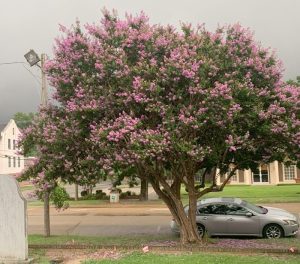
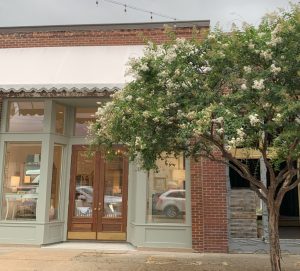 By late June, the Delta landscape bursts into color with one of summer’s most reliable bloomers: the crape myrtle (Lagerstroemia sp.). These heat-loving trees put on a dazzling display of pink, red, white and lavender flowers, brightening streets, yards and gardens across Leland this time of year.
Crape myrtles thrive in Mississippi’s humidity and long summer days. The flower clusters hum with bees and pollinators, adding a layer of life and motion to their vibrant beauty. With a little care, gardeners can stretch their flowering season into September—or even spark a second round of blooms in early varieties.
While rambling around the garden recently, I noticed an overlapping branch and wondered: when is the right time to prune this crape myrtle? That question led me down a rabbit hole of reading – and I found some helpful answers from the Mississippi State University Extension Service’s publications.
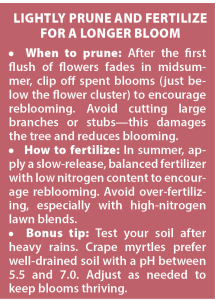
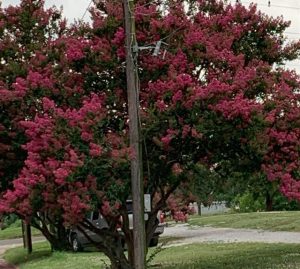 According to MSU Extension, reblooming starts with removing spent flower clusters once the first round fades. A light application of nitrogen fertilizer can help encourage new buds, but experts warn against overdoing it. Too much nitrogen leads to more leaves and fewer flowers.
Extension specialists also recommend avoiding heavy pruning, especially the notorious practice known as “crape murder” — the severe lopping of branches that leaves trees looking like stunted hat racks. Retired horticulturist Gary Bachman even devoted entire episodes of his “Crimes Against Horticulture” series to the offense, delivering tongue-in-cheek investigations worthy of a gardening true-crime show. Beyond the laughs, the damage is real: crape murder weakens the tree’s natural shape and cuts down on flower production.
 This summer’s rain may impact flowering, too. Prolonged moisture encourages fungal diseases like powdery mildew and Cercospora leaf spot. While many newer crape myrtle varieties are resistant, gardeners should
  watch for leaf spots and distorted growth. Fungicide isn’t usually necessary unless symptoms persist.
Insects are another concern. The crape myrtle aphid feeds on sap and leaves behind sticky honeydew, often coated with black sooty mold.
Insecticidal soap can help manage populations, but natural predators like lady bugs also play a key role.
With mindful care and well-timed maintenance, these Southern favorites offer a season full of color and character.
Visit MSU Extension’s resources at https://extension.msstate.edu/search?query=Crapemyrtle+ For more information.