Delta State project supports bald eagle conservation and student research
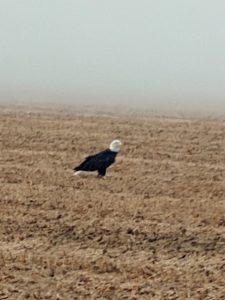
A bald eagle in a field in Bolivar County, Mississippi. (Photo courtesy of Adam Dean.)
Delta State University’s Environmental Science program has secured support for a bald eagle conservation initiative that will provide hands-on research opportunities for university students and environmental education for local schools.
Developed by Dr. Nina Baghai-Riding, professor of environmental science and biology, the project combines habitat assessments, environmental testing and community partnerships to advance bald eagle conservation in the Mississippi Delta.
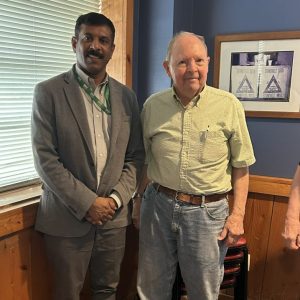
Adam Johnson, environmental division director for the Mississippi Department of Transportation, and the U.S. Fish and Wildlife Service encouraged Baghai-Riding to submit a conservation mitigation proposal after recognizing the strength of Delta State’s Environmental Science program and its wildlife management concentration. The resulting proposal, “Conservation, Education, and Mitigation of Bald Eagle (Haliaeetus leucocephalus) Habitat,” was approved and funded.
The initiative comes as highway widening projects along Interstate 55 in DeSoto County and another Mississippi highway affect nearby bald eagle nests, necessitating their relocation. In early October, the project secured additional backing through an MDOT award issued by Johnson.
Students enrolled in Materials and Methods in Environmental Science and Ornithology will survey potential eagle habitat at Dahomey National Wildlife Refuge, Bear Pen Park and the former Delta State golf course. Their work will include assessing water quality, potential nesting sites and food sources. Students will also use enzyme-linked immunosorbent assay, or ELISA, test kits to screen local plants for environmental contaminants such as atrazine and glyphosate.
The DSU Wildlife Society will host guest lecturers to discuss bald eagle food webs, pollution and emerging threats to eagle habitat. Project activities will also enrich coursework in wildlife management, dendrology, plant systematics, ecology, environmental regulations and biotechnology.
Community outreach will connect university research with environmental learning opportunities for younger students. Baghai-Riding is partnering with educators at Cleveland Central and Hayes Cooper Center to develop hands-on projects for K-12 students that align with Mississippi State Standards. Other project partners include the Mississippi Delta Nature and Learning Center in Greenville, private landowners and professional ornithologists.
Mississippi supports both resident and wintering bald eagle populations. Despite the loss of much of the Delta’s bottomland hardwood forest, eagles have made a regional comeback and frequent rivers, backwaters, catfish farms and agricultural fields. Vehicle collisions, lead poisoning, pesticide exposure and habitat fragmentation remain threats to the birds.
Ulgonda Dunlevy of the U.S. Fish and Wildlife Service’s Migratory Bird Division informed Baghai-Riding that Delta State will be included in future collaborative projects, extending opportunities for the university to contribute to regional conservation efforts.
For more information about Delta State’s Environmental Science program, contact Baghai-Riding at [email protected] or Dr. Joseph Bentley at [email protected].