Invasive pest confirmed in Mississippi cotton
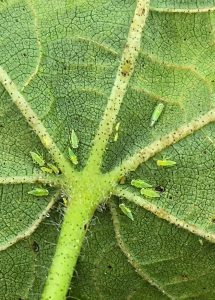
Adult two-spotted leafhoppers are tiny, green insects with a black dot on the hind end of each wing. MSU Extension entomologists urge Mississippians to watch for them on cotton, hibiscus, okra and eggplant.
Mississippi State University Extension specialists are monitoring the spread of a newly-detected invasive pest in central and eastern Mississippi that could threaten future cotton yields across the state, including the Delta.
According to a report by Susan Collins-Smith with the MSU Extension Service, the two-spotted leafhopper—also called the cotton jassid—was first found September 8 in a Hinds County cotton field and has since been confirmed in Noxubee, Neshoba, Oktibbeha and Forrest counties.
MSU Extension cotton specialist Brian Pieralisi said the pest poses little risk to this year’s crop, which is nearing harvest.
“We are far enough along in the season that it shouldn’t be too much of a problem this year,” Pieralisi said. “But there is definitely concern for next year. This pest is here, and it is important that producers are on the lookout for it now and especially next year.”
High infestations can cause “hopper burn,” where leaves turn yellow, red and brown before dropping prematurely. Adult leafhoppers are tiny—about 2 millimeters long—green in color, with a black dot on the hind end of each wing. They feed on the underside of leaves.
The pest also feeds on hibiscus, sunflowers, peanuts, okra, eggplant and other vegetables.
MSU Extension entomologist Whitney Crow urged growers and gardeners to learn how to identify the insect and report sightings.
“When possible, we are encouraging everyone to survey common host plants,” Crow said. “This information will be critical in helping us determine priority areas for surveillance next year.”
Although detections so far have been limited to central and eastern counties, specialists warn it is likely present elsewhere and could spread rapidly. Delta producers are encouraged to begin scouting this fall so they can respond quickly in 2026.
The two-spotted leafhopper is native to India. It was first detected in Puerto Rico in 2023, spread through Florida in 2024, and was confirmed in South Carolina, Georgia, Alabama, Texas and Mississippi in 2025.
Scientists are still studying how it spreads and how to manage it. Crow said the next steps are determining when it moves into cotton, how quickly populations grow and what economic thresholds should trigger treatment.