The first words of this land: revitalizing the Choctaw language in Mississippi
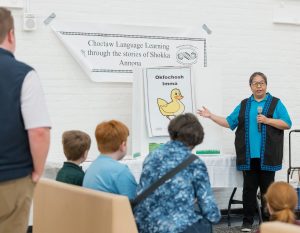
A research team from Mississippi College is working alongside the Mississippi Band of Choctaw Indians to preserve and revitalize the Choctaw language through a multi-year study of the tribe’s K–12 language and culture instruction.
Led by Dr. Sara Kimmel, professor of business, and supported by faculty from communication and modern languages, the project examines classroom teaching strategies and community perspectives used by the Choctaw Language Program. The study is designed to identify best practices for long-term language retention and cultural transmission.
In April 2025, Chief Cyrus Ben of the Mississippi Band of Choctaw Indians, a Mississippi College alumnus, formally authorized the study by signing a resolution approved by the Tribal Council. The research will include surveys, interviews and focus groups with tribal educators, program coordinators and cultural practitioners. A summary of findings is expected by May 2026 and will be shared with MBCI and academic publishers.
 Choctaw Presence in the Delta
Although the federally recognized reservation lands of the Mississippi Band of Choctaw Indians are concentrated in east-central Mississippi (including Neshoba, Leake, Newton, Scott, Jones, Attala, Kemper and Winston counties), the Choctaw have deep historical roots across the entire state. Washington County, including the area now known as Leland, was once part of the broader homelands of the Choctaw people.
Following the Treaty of Dancing Rabbit Creek in 1830, many Choctaw remained in Mississippi rather than relocate west of the Mississippi River. Some continued to live in or return to Delta counties, maintaining community ties despite political displacement.
These historical links make the current revitalization effort relevant not only for tribal communities on the reservation, but also for families in the Delta who identify as Choctaw descendants or share cultural connections through education, intermarriage or regional history.
Cultural Collaboration and Local Significance
“This study gives us an opportunity to work with our Choctaw students and honor them through their language,” said Kimmel. “It only takes one generation for a culture to lose its language.”
Dr. J. Mignon Kucia, professor of communication at Mississippi College, said language plays an essential role in cultural understanding.
“Helping a culture maintain some of its unique flavor provides opportunities for students to appreciate the importance of culture in communication,” Kucia said.
Latricia Johnson, coordinator of the Choctaw Language and Cultural Integration Program, said the research has been years in the making. “I feel like our Tribe, our people and our language are being seen and heard for the first time,” she said.
The project builds on a 2022 memorandum of understanding signed between Mississippi College and the MBCI to support cultural exchange and mutual learning. Faculty researchers say they will pursue grant funding and additional projects with full partnership and approval from the Tribe.
Local Impact
For Washington County residents, the study may open doors to expanded access to Choctaw language instruction, support for cultural literacy programming in schools and libraries, and renewed recognition of the Indigenous history of the Mississippi Delta.
“Language helps preserve history,” Kimmel said. “When languages are lost, we lose knowledge and the ability to share our cultures.”
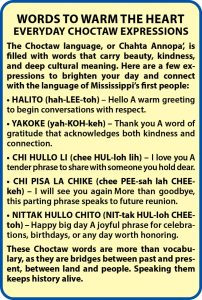
As we honor these efforts to preserve Choctaw heritage and strengthen ties across Mississippi, we say Yakoke: thank you.
In Choctaw, Yakoke (yah-koh-keh) is more than just “thanks.” It expresses gratitude with respect, a word carried through generations by those who have kept the language alive.
Yakoke to the educators, elders and students leading this work.