Get to know Spider lilies – a welcome sight every fall
By Guest Columnist Lynn Libous-Bailey
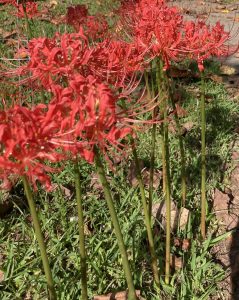 It was in early September when I moved to the Delta. Within weeks of my arrival, I began seeing thousands of green spears emerging from pristine lawns across town. Decades later, I still watch in amazement when this yearly ritual begins.
Spider lilies (Lycoris sp.), also known as Hurricane Lilies, are bulbs that produce tall straight flower spikes around mid-September, before the leaves emerge from the ground. The reddish flowers, produced in a large cluster at the top of the spike, have protruding floral parts (stamens). This makes the flowers look as though a red- legged spider is sitting in the middle, with its legs hanging out. A clump in full bloom is a sight to behold.
What troubles me is that these bulbs have been banned to such a lonely existence outside of most flower beds. In rows at the edge of the property line, in circles around trees, flanking either side of driveways. Planted by the thousands in an orderly fashion away from other plants. How sad.
Spider lilies would be the perfect companion plant in a perennial border. The fact that the spider lilies are dormant at a time when most plants are in full bloom is a plus. The leaves of spider lilies emerge in mid-late October, following their blooms, and provide green in the plant throughout the winter, when most perennials are dormant. The leaves are the perfect backdrop for pansies, mums and strategically-placed ornamental pumpkins for a fall ensemble.
Spider lilies can take full sun and are drought tolerant and forgiving of less than perfect conditions – except for long periods of standing water. They multiply freely and are easily dug and divided. About four weeks after bloom, I dig and gingerly pull apart/ divide a clump into thirds, replanting one third, and re-locating the other two thirds. Dig the hole, fill with water, place the transplant into the muddy slurry (not too deep), back fill with the soil and pat firmly. The clump hardly misses a beat.
Water, a friend of mine once told me, is the most important fertilizer that you can give a bulb. It is the late summer/early fall tropical rains that we receive which allows these bulbs to persist, unattended, around abandoned homesteads. This year, Francine’s presence provided us with enough rain to trigger the yearly spider lily bloom ritual. And, from what I see around town, they will not disappoint.