
Back to the heart of it: How a Delta town is rewriting its story
Part II of a series on Leland’s quiet renaissance
From decay to rebirth
Degrees alone do not bring towns back to life; people do. In downtown Leland, preservationist and entrepreneur Sherry Smythe is helping revive the heart of Third Street. Where storefronts once stood empty, new life is returning. Her work secured a $10,000 National Endowment for the Arts mural grant that helped restore six blues-themed murals.

Sarah (left) and Sherry Smythe
“She is not just saving buildings,” one resident said. “She is making space for the return of minds and meaning.”
Lagniappe, a bright home design and décor shop that reopened on Third Street last year, shows how one storefront can lead the way. Sarah Smythe owns the shop and brings New York design experience with a modern edge to Delta charm. Next door, tuck-pointers work the brick façades, dust rising in the air. It evokes old black-and-white photos of men on scaffolds above New York, smoke curling beside steel beams as they rebuilt something larger than themselves. That feeling hangs here now. The haze is not just construction. It signals momentum. Something is happening here.
The millennial pull
What surprises is not only who stayed; it is who is coming back. Washington County’s median age is 38.3, nearly the national 38.7, and mobility is steady with about 11.2% of residents moving in the past year, according to the 2023 American Community Survey. At an entrepreneur workshop this summer, fewer than half the participants were Delta natives. Many, like me, moved from out of state to build something lasting.
“What’s drawing millennials back isn’t just nostalgia, it’s the chance to live affordably, work meaningfully, and raise our children in a place where we can truly make a difference. In Washington County, we’re surrounded by world-class resources like Stoneville, strong educational opportunities, and a community that values progress. Here, you don’t just live; you contribute. And that’s the kind of future we want to build for our families.” — Mary Catherine Brooks, Chamber Director, Washington County Economic Alliance & Leland resident
Why Washington County works
• Cost of living: Median home value about $99,300, roughly one third of the U.S. median, per U.S. Census Bureau ACS 2019–2023. County median listing price was $141,300 in July 2025, Realtor.com reports.
• Remote work: Broadband upgrades make hybrid careers viable.
• Community feel: Average commute about 19.2 minutes. Neighbors wave from porches.
• Education and culture: AP and dual credit in local schools, strong library, sports and 4-H programs, and the E.E. Bass Cultural Arts Center in nearby Greenville.
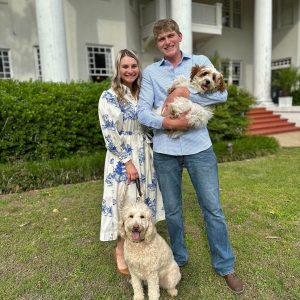
Bella (left) and Miller Gehrke
“We left for school and careers, but we came back to build something we could pass on,” one young entrepreneur said.
Miller and Bella Gehrke and their family moved from a neighboring state and are leading the restoration of the Thompson House and Restaurant, with a swanky speakeasy in art deco gold recently opened in the basement. They are also renovating The 1902 Brocante: A Parisian-Style Market of Intriguing Treasures, Bistro and Floral Market at 205 N. Broad Street, along with two more historic buildings on Deer Creek.
Leland is not just seeing return migration. It is being reimagined quietly by people who believe in what is possible.
The unspoken trifecta
Safety, affordability and coffee. That last piece is shorthand for a third place that signals comfort and trust. Smythe’s vision includes a spot where children can curl up with books and newcomers swap ideas with old-timers over coffee.
One friend told me she is holding off on moving back to Leland until there is one “legit bougie coffee shop” downtown. She may not wait long.
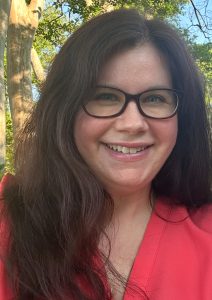
Sara Worsham
Sara Worsham plans to open The Next Chapter, a cozy bookstore café dreamed up with her librarian mother, selling books, graphic novels, comics, stationery, cards and handmade art in time for the holidays. The coffee bar will be run by a partner to be announced, and the design promises the kind of warm, literary aesthetic that makes readers linger.
As for safety
Perception lags reality. Leland Police Department does not publish FBI-audited city rates in the federal dashboard, but neighbors see familiar patterns: a steady police presence, regular routines and families biking, grilling and gardening after dark. It also helps that next-door Greenville reports a sharp decline in violent crime since a citywide curfew began in June. Police Chief Marcus Turner told the City Council in August that violent crime is down 79%, crediting residents for the turn-around. Figures are department compar-isons for the same period, not FBI annual rates.
Setting the record straight on school safety
Leland’s public schools, like the town, are often misread by outsiders through narratives shaped by race and poverty. The district serves a student body that is more than 98% Black, with nearly all students qualifying for free or reduced lunch under federal community eligibility rules. Those numbers do not define classrooms. Only eight students districtwide are placed for emotional or behavioral disorders, a remarkably low figure by national standards.
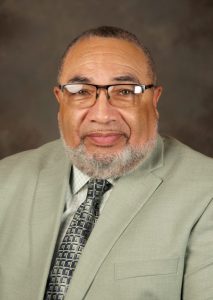
Rev. Jesssie King
Superintendent Rev. Jessie King puts it simply: “I want great experiences for all students every day in this district.”
What this does and does not claim
This story does not argue that Leland has solved every problem or that risk disappears in small towns. In Leland, everyday life feels safe, outweighing a Delta reputation often colored by narratives about race and poverty from larger towns. Visible investment, close-knit neighbors and a school culture of calm, consistency and high expectations sustain it.
Educators, students, entrepreneurs, workers and residents here live this truth: safety and excellence are not reserved for the suburbs.
EDITOR’S NOTE: Part I (August) mapped Leland–Stoneville’s intellectual density and public school momentum. Part III (October), “Eureka in the Delta,” will outline a blueprint for rural innovation that links research campuses, Main Street and classrooms.


I am so very proud of my hometown. Such wonderful memories of playing Kick the Can with friends on Deer Creek Drive and West Second Street. A couple of years ago my sister, Nancy Lee Calhoun, and I were in Leland just as last minute plans were being finished for Christmas on the Creek. I cannot tell you how proud I felt seeing so many citizens no matter their color working together making Leland beautiful for this important event!
It takes a village to keep improving. Keep it up Leland.