Daytripping: Discovering ancient ingenuity at Poverty Point
 By Lora Delhom
We all get 1,440 minutes a day, but how we spend them is up to us. Around the world, “extreme day tripping” is gaining popularity – fast-paced, memory-packed adventures packed into a single day. This summer, lower gas prices and higher hotel costs are fueling the trend in the United States, making day trips a budget-friendly way for families to explore without the cost of an overnight stay. Why not bring that same spirit to the Mississippi Delta?
In this new column, we’ll explore how far you can travel from Leland and still make it home by nightfall to tuck everyone into their own beds.
First up: a journey to Poverty Point, an ancient mound site and UNESCO World Heritage Site that’s part of a vast earthwork culture rooted right here at home. No suitcase required — just curiosity, snacks and maybe some sunscreen.
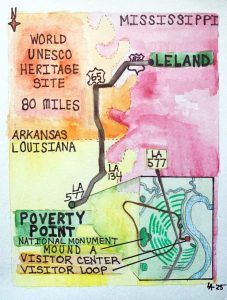
Located about 75 miles from Leland, Poverty Point sits near Epps, Louisiana. The drive west on U.S. Highway 82, briefly winding into Arkansas, offers a scenic and manageable route.
 Built between 1700 and 1100 B.C. by Indigenous peoples, the site features massive earthen ridges and mounds that served cultural, spiritual and trade-related purposes. These discoveries reshaped how archaeologists understand hunter-gatherer societies. Poverty Point is now considered one of the most complex ancient engineering feats in the western hemisphere and is a UNESCO World Heritage site.
Start your visit at the museum. As a Louisiana state historic site, Poverty Point charges a small admission fee. Inside, the exhibits walk visitors through the timeline of the mound builders and showcase artifacts such as stone tools and decorative objects. The staff in the museum are especially great with kids, offering hands-on demonstrations and explanations about ancient tools and craftsmanship. It’s an engaging introduction to archaeology and cultural history.
With advance notice, site educators can offer demonstrations in areas like toolmaking the atlatl and excavation techniques—ideal for groups or curious families.
Grab a map and take the 2.6-mile walking or driving trail around the complex or purchase a ticket for the new guided trolley tour, offered several times daily. The most impressive structure, Mound A, stands seventy-two feet tall and may have been built in just thirty to ninety days by as many as ten thousand people from surrounding communities. Archaeologists still marvel at this achievement.
Poverty Point’s influence stretches well beyond Louisiana. Artifacts found at the site originate from as far away as the Great Lakes and the Appalachian Mountains, pointing to an expansive prehistoric trade network across North America. The site also connects to mound-building cultures throughout the Mississippi Valley, including those near Leland.
After exploring, enjoy a picnic on the grounds or head to nearby Delhi for lunch. Then return home with plenty of daylight left.
In one day, families can step back thousands of years and walk the same ground shaped by ancient builders before the time of Machu Picchu.
Poverty Point is more than a destination; it’s a reminder that the Delta has long been a place of innovation, connection and wonder.
Check out their website for current tour times and prices: wwwPovertyPoint.us.