Planting hope: new farm bill brings relief to Delta fields
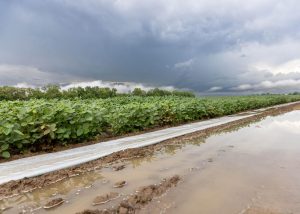
Water stood in this Washington County soybean field after another heavy rain June 19, 2025.
As global competition and oversupply push corn and soybean prices to inflation-adjusted lows not seen in nearly nineteen years, Delta and Mississippi farmers are getting a welcome boost from new federal support.
The H.R. 1 omnibus bill, signed into law July 4, includes significant updates to farm safety nets: it raises Price Loss Coverage (PLC) reference prices across major crops and introduces targeted assistance for high-risk Delta producers.
Increased PLC reference prices are already in effect for the 2025 crop year:
Corn: $3.70 → $4.10 per bushel
Soybeans: $8.40 → $10.00
Cotton: $0.36 → $0.42 per pound
Rice: $14.00 → $16.90 per hundredweight
MSU Extension economists note that crop insurance subsidies have also been enhanced. Supplemental coverage is now subsidized at up to 80%, providing further financial support.
“These subsidies will be especially helpful to Mississippi growers, because our premiums are significantly higher than other regions due to weather volatility,” Will Maples said.
“Farmers who previously enrolled in either ARC or PLC will receive the higher of the two payments this year, but that’s only for this year,” said Will Maples, MSU Extension agricultural economist, referencing the program updates in H.R. 1.
ARC (Agricultural Risk Coverage) provides payments when a farmer’s actual revenue (based on yield × price) falls below a guaranteed revenue level set by the USDA.
PLC (Price Loss Coverage) provides payments when the market price for a crop falls below a set reference price (which was just increased for 2025 in the new legislation).
Why This Matters Here
Row crop futures: Corn is trading around $4.10, soybeans near $10.20, so these lower future prices amplify the value of H.R. 1’s increased safety nets.
Global supply glut: High global supply, especially with Brazil’s surging corn and soybean output and Ukraine’s grain exports, is putting pressure on prices. The current squeeze recalls trade dynamics of the 1970s, when rising global competition began to challenge U.S. dominance in agricultural exports, according to the USDA Economic Research Service.
Local Impact: What This Means for Delta Growers
With reduced acreage from a soggy spring, Delta growers’ income opportunities now depend heavily on PLC support and insurance protections.
Cotton acreage is down 31%, and rice is down 16% in the state, mainly due to persistent rains, muddy conditions and planting delays. Wet fields may reduce yields or delay harvest, pushing farmers to rely more on crop insurance and updated safety nets in H.R. 1. Flooded acreage and missed planting windows have triggered “prevented planting” claims, making this year’s coverage especially vital for families across the region. H.R. 1’s updated programs come at an essential moment, offering stability amid tighter margins and shifting market dynamics in the Delta farming community.
U.S. farmers expanded corn acreage in 2025, while cutting back on soybeans, cotton and rice. In Mississippi, similar shifts occurred, but with steeper cuts to cotton and rice, reflecting prolonged spring flooding and tighter margins across the Delta.
Drew Gholson, Extension irrigation specialist, said if there is a silver lining to all the rain, it is that rain in June reduced the need for irrigation in some fields.
“A benefit of some of the rain has been the first irrigation was delayed in corn in a lot of areas longer than I have seen,” Gholson said. “Some of our corn acres, especially in the south Delta, made it through a good portion of the higher water demand, growth stages with just rainfall.”