Precision conservation helps Delta farmers boost farm profitability
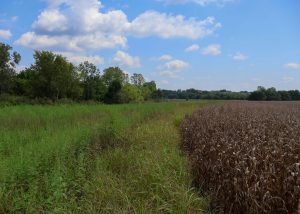
A native prairie grass conservation edge-of-field buffer along soybean agricultural land at Prairie Wildlife in West Point, Mississippi.
A Mississippi State University tool is helping farmers across the Delta and beyond boost profits by identifying acres that cost more to farm than they earn.
Researchers Edward D. Entsminger and Mark D. McConnell with MSU’s Forest and Wildlife Research Center developed the Precision Conservation Tool (PCT) to show exactly where conservation practices make the most economic sense. Using multi-year yield data, input costs, digital maps and market prices, the software generates a “profitability map.” Profitable zones appear green, while unprofitable acres show up red.
“Not all acres produce equally,” McConnell said. “Sandy ridges, soggy low spots and other marginal areas often drain time, money and resources.”
Tradition keeps many farmers working every acre, but MSU research shows that retiring the least productive ground can actually increase profits. In a 2022 Lowndes County study, producers raised net revenue by an average of 24% by enrolling poor acres in the USDA Conservation Reserve Program (CRP). Some fields saw profits double or even triple.
The PCT does more than locate problem spots — it projects potential revenue from conservation programs and matches acres with more than 30 Farm Bill practices, including CP-21 filter strips, CP-33 upland bird buffers and CP-42 pollinator habitat.
Converting vulnerable acres offers multiple benefits: reduced erosion, improved soil health, cleaner water and new habitat for wildlife and pollinators. Bobwhite quail, whose populations have declined more than 85% since the 1960s, are among the species that rebound when native vegetation is restored.
“Most acres are still best suited for row crops,” Entsminger said. “But some bring more value through conservation. The PCT gives producers the data they need to make confident, profit-minded decisions.”
Photo courtesy of MSU Extension Service/Edward D. Entsminger