“Where Joy Meets Genius”
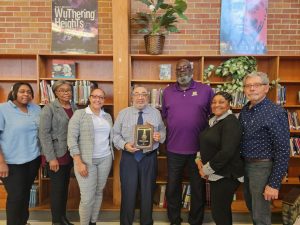
In February 2025, the Mississippi School Boards Association recognized Leland School District as a Lighthouse School Leader Torch Award district — a distinction that signals what’s possible.
This full plan builds on the vision outlined in “Back to the heart of it: Eureka in the Delta Part III: How a rural Mississippi town is channeling Euclid — aligning schools, research and Main Street to power its future” (The Leland Progress, Oct. 2025) and offers a detailed blueprint for turning Leland’s intellectual capital into momentum.
By Lora Delhom
🌱 Leland Innovation Lab School Pilot
One possible pilot model: a district-run, independent-study magnet designed to attract and keep advanced learners in the public system while allowing flexibility for gifted, 2e and medically fragile students.
Concept:
Families guide day-to-day instruction at home with pacing support from a Leland teacher of record. Students attend weekly on-site labs, arts blocks and therapies tailored to their IEPs or strengths.
Key Features:
- Vendor Approval Pathway: District pre-approves enrichment providers — including online Waldorf programs, specialized arts/STEM instructors and therapists — under contracted agreements.
- Gifted/2E Track: Block-style seminars, above-level math and ELA with developmental pacing and wraparound supports for dyslexia, dysgraphia, dyscalculia, mild ASD and ADHD — including social-emotional coaching and executive-function scaffolding.
- On-Site Cohorts: 1–2 days per week on campus for science labs, art and therapies.
- Transportation: Hub bus (30–40 min radius) for rural access.
- Equity Guardrails: In-district + sibling priority, then lottery; public reporting on participation and outcomes.
- Stoneville Partnership: Field Days, Gin School youth track and project-linked guest lectures from local scientists — without requiring weekly mentoring.
Parent FAQ – Flexibility + Accountability
✅ Private Providers: Families may continue using private OT, SLP, tutors or therapists at their own cost/insurance. The district documents only what it funds (for FAPE/IEP compliance). Private notes may be shared but aren’t required.
🚐 Field Trips and Travel Count Too: Trips can be pre-listed or logged afterward with a journal entry, sketch, photo, or short write-up. Parents pay mileage/cost, but district buses may cover special group enrichment trips.
🔑 Why It Matters: Families keep homeschool-style freedom (private providers, flexible travel) plus public-school credit, labs, therapies and gifted supports — without losing their own investments.
🌱 🌱 Hybrid Hub or Co-Op Option:
For families who can’t be home during the day, the district or private co-op could provide a supervised “learning lab” space: Staffed Homeroom and Flexible Access.
This model option combines the flexibility of home-based learning or a micro school with the structure and equity of public education making Leland a beacon for families seeking advanced, individualized and small group options.
🌱 Gifted and 2E: Belonging Over Acceleration
Gifted and twice-exceptional students often master grade-level work quickly — what they need is pace, depth and peers who think like they do. True belonging keeps curiosity alive.
Part of what makes The Big Bang Theory so resonant is that no one ever diagnoses Sheldon — he simply finds a small group of friends who help him grow and stay curious. Every “Sheldon” deserves that kind of circle: not just faster work, but a space built for acceptance where big questions can become projects and ideas can grow.
For every one “Sheldon” in Leland, there are two or three nearby in the Delta — enough to start a pilot of four or five students. That’s all it takes to begin home-growing the next generation of Stoneville researchers.
_____________________________________________________________________________
🔬 Stoneville’s Research Pipeline: What only Leland can do
Field Days for Students
Expand events with earlier marketing so small student cohorts from Leland, Hollandale and Greenville can attend kid-scaled sessions tied to live research projects.
Gin School Youth Track
Create a junior/senior pathway where students sit in on demonstrations already offered to industry professionals — giving them an early look at ag-tech careers.
Paid Summer Research Jobs
Allow local high school juniors and seniors to be hired quickly for part-time lab work — without losing half the summer to D.C. HR delays. Even one student per lab could help build a rural talent pipeline.
STEAM Innovation Lab or Academy as the “On-Ramp”
A district-run Academy could prepare students in class, then connect them directly to field and lab experiences — no weekly mentoring required, just open doors at the right moments.
_____________________________________________________________________________
🧭 Pushing the Mississippi Model Into Leland’s Public Education
- K–8 Math Focus: Move the middle school out of “D” by doubling down on numeracy — universal math screening, targeted Tier 2 small groups, double-blocked math in grades 6–8, high-dosage tutoring and eighth-grade science labs tied to real data from Stoneville.
Special-Needs Access: - Special-Needs Access: Build regional multidisciplinary teams — dyslexia therapists, OTs, SLPs and school psychologists — with tele-services to shorten wait times. Partner with Delta Health Alliance and Leland Medical Center to offer social-skills groups, after-school small groups, and executive skills training for middle-grade students when organization and self-management demands increase. This creates a bridge between school and healthcare, giving
- Teacher Pipeline: Strengthen recruitment and retention with National Board stipends, residencies, math/science/special education bonuses, rural housing incentives and mentor coaching to support new teachers in middle grades. MDE review case for a $50,000 statewide starting-salary floor.
📌 Pay Teachers Like a Research Town
- Set a $50,000 starting-salary floor statewide (MS ranks last nationally for teacher pay)
- Add rural STEM/STEAM incentives: $7.5k–$10k stipends for math/science/CS/SPED-STEM.
- Offer housing help (signing bonus or rent offset) for 3-year commitments.
- Fund paid residencies and fast, coached licensure for alt-route STEM pros.
- Stack NBCT bonuses with a $5,000 rural-shortage adder (math, science, SPED).
- Build the pipeline: scholarships for dyslexia/reading science (keep the MS lead) + new math-interventionist and middle-grades coaching endorsements.
Why it matters: Nearby federal GS-11 scientists earn ~$72k (≈$59k on a teacher calendar) and big metros like Chicago pay teachers nearly $100k. Without a competitive floor and rural add-ons, Leland will struggle to recruit and keep the STEM/SPED talent needed to lift middle- and high-grade math outcomes.
_____________________________________________________________________________
📊 Data Lessons for the Delta
Here’s how Leland scored campus by campus in the 2024–25 state report cards, showing both the district’s early-grade strengths and where growth is most needed in the middle years.
📊 Leland at a Glance MS Accountability Report(2024–25)
| Campus / District | Grade | Total Points | Reading Prof. | Math Prof. | Science Prof. | Reading Growth | Math Growth | Reading Low-Growth | Math Low-Growth | CCR / Grad / Participation |
| Edna M. Scott Elementary | A | 443 | 39.8% | 45.9% | 87.8% | 59.0 | 69.2 | 65.2 | 76.0 | — / — / ≥95% |
| Leland School Park (Middle) | D | 316 | 29.2% | 34.7% | 20.8% | 60.8 | 53.9 | 60.3 | 56.1 | — / — / ≥95% |
| Leland District (overall) | B | 641 | 33.3% | 42.3% | 65.3% | 59.6 | 63.9 | 64.9 | 68.3 | CCR: 80.9 / Grad: 84.8% / ≥95% participation |
🧮 What These Numbers Mean:
Proficiency: % scoring Proficient+ on MAAP (subject-specific). For example, Edna M. Scott’s high science rate (87.8%) signals strong student performance in that domain.
Growth: Points for improving performance level or maintaining Proficient/Advanced.
Low-Growth: Extra emphasis on students in the lowest 25% statewide; when those students make above-average gains, it lifts the whole score more.
CCR: % of graduates hitting ≥1 benchmark (ACT, dual credit, AP, career cert).
Grad: % finishing high school in four years.
Participation: Schools must test ≥95% of students to avoid point penalties.
The data confirms what educational leaders are saying: keep building on the elementary momentum, and focus next on middle-grade growth and eighth-grade readiness.
📊 How Mississippi Public School accountability system works — plus the racial and income proficiency gaps

What it shows:
Most of Mississippi’s A-rated districts serve whiter, higher-income student populations and statewide data show proficiency rates closely track with household income and race — though the state does not report whether those relationships are causal (Mississippi Department of Education, 2025 accountability report). Rural, majority-Black districts make up most of the C–F list, many in Delta districts, a pattern shaped by decades of segregation, consolidation and economic decline.
Leland is a rare exception: a majority-Black district with 100% third-grade reading and math proficiency and a B rating. Its performance shows that strong teacher retention, tutoring and early literacy work can narrow gaps — even though Mississippi’s accountability model does not adjust points for race or poverty. The formula gives extra weight for growth among the lowest 25% of students statewide, which can boost high-poverty districts, but it only partly offsets lower proficiency rates (MDE Accountability Standards, 2025).
Statewide gaps (2024):
• ELA: White 61.5% vs. Black 34.9% — 26.6-point gap
• ELA by income: Economically disadvantaged 38.8% vs. non-disadvantaged 64.9% — 26.1-point gap
• Math by income: Economically disadvantaged 45.1% vs. non-disadvantaged 73.0% — 27.9-point gap
(Mississippi Succeeds Report Card, 2024)
_____________________________________________________________________________
🧮 Strengthening the Math Pipeline
Leland can replicate Mississippi’s K–3 literacy success — this time for math.
Key Steps
- Universal Screening: Test all K–6 students three times a year for early math risk.
- Tier 2 Interventions: Use evidence-based programs like Pirate Math and Fraction Face-Off!
- Early Dyscalculia Identification: Ensure twice-exceptional students get supports before middle school.
Policy Hooks Mississippi Can Copy
- Require parent notice + intervention plans when students show “substantial deficiency in mathematics” (Florida model).
- Publish a state Dyslexia–Dysgraphia–Dyscalculia handbook (Texas model).
- Train one lead math interventionist per K–5 school (Virginia/Oregon model).
- Create a statewide center for dyslexia and related SLDs to coordinate tools, PD and reporting (New York model).
- Codify 2e protections so gifted status doesn’t hide disability (NJ/CO model).
Board Action (One-Liner)
“Authorize K–6 numeracy screening, adopt WWC-aligned interventions, and fund evaluations/PD through IDEA-B, Title II-A and Title I; report BOY/MOY/EOY gains to the board.”
_____________________________________________________________________________
📢 Policy Punch List
💵 $50K Salary Floor – Make Mississippi competitive for teacher recruitment.
🧪 Rural STEM/STEAM Incentives – $7.5K–$10K stipends + housing support for math, science, CS, and SPED-STEAM teachers.
🚌 Local Hiring Authority – Let Stoneville hire high school juniors/seniors and college students for paid summer jobs on time.
➕ Middle-Grade Math Coaching – Expand K–3 literacy model to grades 6–8 and add math/dyscalculia screenings to close the hidden math gap for STEM careers.
🌱 Innovation Zones & Pilot – Approve the Leland Innovation Lab School and give districts flexibility to incubate their own rural models.
Parents, educators and policymakers: read the full plan and share your feedback in the comment section or email [email protected].