Brain boost: How a simple puzzle can boost learning, ease stress, and support brain health for life
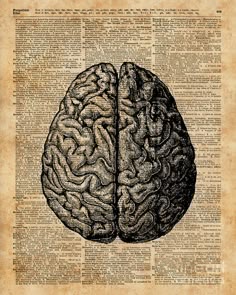 By Lora Delhom
Can a simple puzzle really sharpen the mind? According to a growing field of cognitive-science research, the answer is yes — and what’s encouraging is that these benefits don’t require expensive programs or rigid routines. They come from small, simple stretches of the mind that fit easily into everyday Delta life, the kind you can tuck into a quiet moment or a cozy corner of the day.
Why Puzzles Work for All Brains
Neuroscientists have long known that when we engage with logic, word, spatial, or numerical challenges, the brain forms and strengthens the neural pathways that underlie learning, attention, and problem-solving. This process — neuroplasticity — is how we stay sharp across the lifespan (Karbach & Verhaeghen, 2014).
A major study from King’s College London found that adults who regularly worked word and number puzzles performed significantly better in memory, reasoning, and attention — with cognitive profiles equivalent to being up to eight years younger (Paddick et al., 2020).
It’s one of those science findings that feels both hopeful and wonderfully doable.
Puzzles and Stress Reduction
Puzzles don’t just make us sharper — they help settle the mind. A 2023 study by Garcia and colleagues found that puzzle engagement lowered two key stress biomarkers: cortisol, the hormone connected to the body’s stress response, and salivary alpha-amylase, an enzyme that rises during moments of acute tension. Participants also showed stronger sustained attention after even brief puzzle sessions (Garcia et al., 2023).
For neurotypical and neurodivergent learners alike, puzzles offer a simple way to calm the body while supporting focus — a quiet anchor in a noisy world.
A Tool for Gifted and Twice-Exceptional Students
Gifted and 2e students — those who carry high ability alongside learning differences like ADHD, dyslexia, or autism — often thrive on tasks that challenge reasoning and pattern recognition rather than speed or output. Research shows that puzzles and logic activities build cognitive complexity, the deep thinking that fuels creativity and original problem-solving (Renzulli, 2012).
Because many 2e learners have uneven executive-function profiles, puzzle-based learning can strengthen working memory, flexible thinking, and sustained attention — skills that support both academic growth and confidence (Assouline et al., 2010).
In other words: puzzles create low-pressure pathways for high-level thinking.
And What About Neurotypical Learners?
The benefits extend across the board. Studies show that puzzles offer neurotypical learners a gentle stretch — a way to deepen higher-order thinking, improve focus, and build the mental agility that supports learning at every age. These gains show up not only in academics but also in resilience, problem-solving, and emotional steadiness.
Protecting the Aging Brain
For older adults, puzzles serve as a protective factor against cognitive decline. Long-term studies link regular engagement in mentally stimulating activities with a lower risk of Alzheimer’s disease and other dementias (Hall et al., 2009; Wilson et al., 2013).
One study in Neurology found that older adults who frequently engaged in cognitive hobbies like puzzles experienced a 47% reduction in the rate of memory decline (Wilson et al., 2012).
These activities also supported better day-to-day functioning and quality of life for individuals with mild cognitive impairment. It’s never too early — or too late — to give the brain something meaningful to chew on.
The Right Mix Makes the Biggest Difference
Rotating puzzle types — a practice known as cross-modal cognitive training — offers broad support:
Logic & Reasoning: Sudoku, chess, logic grids
Verbal Skills: Crosswords, word scrambles
Spatial Reasoning: Pattern puzzles, 3D challenges
Memory & Focus: Jigsaws, matching tasks. Even small, consistent moments of puzzle work can create measurable gains (Karbach & Kray, 2016).
Why the Karbach & Kray Study Matters
This study followed more than 300 participants across childhood, adulthood, and older age. Researchers used short daily sessions of adaptive cognitive tasks — memory challenges, pattern switching, logic activities — and measured changes in working memory, attention, task switching, and inhibitory control. In the Karbach & Kray (2016) study, “small, attainable sessions” meant brief 10–15 minute daily training periods using simple single- or dual-task activities with adaptive difficulty that increased only when participants were ready, with no expectation of perfection, speed, or mastery.
What stood out was not the intensity of the work but its gentleness and consistency. Small, manageable sessions strengthened neural pathways over time.
For parents — especially those raising gifted, 2e, ADHD, or neurodivergent kids — this is a relief. You don’t need elaborate systems or daily pressure. Even small, periodic engagements with puzzles — once a month as a family ritual or in a quiet moment — can support better flexibility, attention, and problem-solving.
You’re not behind. You’re not meant to do everything every day. The research is clear: incremental, joyful mental challenges matter.
Puzzles become one more nourishing thread in the tapestry of lifelong learning — not a burden, but a boost.